Monday, June 04, 2007

04:42 The Tipping Point


The Tipping Point
Malcolm Gladwell

I borrowed this book – what, three years ago? – from someone at work. Then I quit my job and had no desire to see the person from whom I borrowed the book, so I kept it, unintentionally stealing. Then, as fate would have it, I ended up being rehired at my old job as a temp (I didn’t make enough to be considered a “consultant”). Earlier this year when I decided I was going to quit my job for a second time, I was determined to read and return The Tipping Point before I left. I’m a big fan of closure, though obviously not a big fan of that job.

Why do some phenomena become ubiquitous in the culture, whereas others die a quick death? This is the guiding question in The Tipping Point but you get the sense that Gladwell’s answers could fit on a PowerPoint presentation: he classifies people who carry new ideas as Connectors, Mavens, or Salesman; outlines a “Stickiness Factor,” and the “Power of Context,” all of which explain (or are imposed on) such disparate phenomena as sneaker popularity, venereal disease epidemics, and teenage smoking.

I remember the article in The New Yorker in which Gladwell first articulated his ideas. He used the example of cars parked on a street in an unsafe neighborhood. A number of cars are parked on the same street, similar with respect to price, condition, and age. But if you noticeably damage one of them (for example, cracking the windshield), then that car alone would then be preyed on and further vandalized within a few days, sometimes even hours. All factors were equal save the broken windshield, “the tipping point,” the one extra nudge that would let people in the area know that this car could be damaged without repercussions. This theory, “little things mean a lot,” was behind Giuliani’s crackdown on crime in New York City in the 1990s. Remove the atmosphere that forgives minor crimes and you’ll remove the atmosphere that permits major crime. We may not be able to prevent crimes like murder, but we can stop the small noticeable crimes (graffiti, panhandling) that let people to think they live in a society that ignores all crimes.

Like many books written by journalists, The Tipping Point reads like a series of previously published articles re-written and edited to fit a theme. Gladwell does write well and is able to discuss scientific or sociological studies without wallowing in jargon. The proof offered for his theories ranges from “Sesame Street” to Paul Revere’s ride and seems chosen less for applicability than for the fact that he finds them interesting. As did I. The “Stickiness Factor” and the Connectors aren’t as engaging as the history of “Sesame Street.” For example, before the show aired, child psychiatrists insisted that the Muppets be kept separate from the scenes with live actors because children wouldn’t accept the interaction between fantasy and realistic figures. When they tested the show with children, the kids lost interest as soon as the Muppets were off screen. The producers decided to try an episode in which Muppets and humans mixed. This time, the children’s attention rated higher than it did for either the Muppets of the humans alone, and they never had any trouble with the mixing of fantasy and realism. Makes one wonder what else child psychiatrists have gotten so wrong.

What was most satisfying about The Tipping Point was that it supported two pet theories of mine:

1. The human mind is formed and formatted by narrative, not by language.
Child development experts, psychologists and neurologists have argued that language, initially spoken, then written, is the source of connections in the human mind. Learning language is what sparks growth in our brains as children and it is how our brains are thereafter conditioned. Other factors can be important (images, music) but language is primary.

Doesn’t ring true to me and never has.

I have long believed that it is narrative, little stories, cause and effect, that structures a child’s brain, and remains the underlying way in which they think as they get older. Yes, we use language to express and understand narrative, but narrative is what’s primary, not language. Before children can understand words, they experience life as a simple story, cause and effect: I was hungry, I cried, I got fed. A story with a happy ending. As we grow, the stories become more complex as our brains develop and our understanding of the world increases. Language develops in response to our brains’ growth and its ability to handle more complex narratives.

I’ve never done the requisite research to prove this – I wouldn’t even know where to begin – and I think I’ve only discussed this idea once or twice with others (while a little drunk, no doubt). However, on page 119, Gladwell writes:

The project centered on a two-year-old girl from New Haven called Emily, whose parents – both university professors – began to notice that before their daughter went to sleep at night she talked to herself. Curious, they put a small microcassette recorder in her crib and, several nights a week, for the next fifteen months, recorded both the conversations they had with Emily as they put her to bed and the conversations she had with herself before she fell asleep. The transcripts – 122 in all – were then analyzed by a group of linguists and psychologists led by Katherine Nelson of Harvard University. What they found was that Emily’s conversations with herself were more advanced than her conversations with her parents. In fact, they were significantly more advanced. One member of the team that met to discuss the Emily tapes, Carol Fleisher Feldman, later wrote:

“In general, her speech to herself is so much richer and more complex [than her speech to adults] that it has made all of us, as students of language development, begin to wonder whether the picture of language acquisition offered in the literature to date does not underrepresent the actual patterns of the linguistic knowledge of the young child. For once the lights are out and her parents leave the room, Emily reveals a stunning mastery of language forms we would never have suspected from her [everyday] speech.”

Feldman was referring to things like vocabulary and grammar and – most important – the structure of Emily’s monologues. She was making up stories, narratives, that explained and organized the things that happened to her.


Emily is making up stories to make sense of the world around her, and to entertain herself before she goes to sleep. The story is primary; language is merely the tool to express it. This reminds me of my own experience as a child. Language and words were not that important to me or any of the children I knew. But stories were. Not only as entertainment, but as a way of processing and passing on information and solving the mystery of the world into which we are born.

2. Individual psychology is overrated; group psychology is underrated.
For a while, I’ve been interested in what I think of as group dynamics: the way that people assume roles when in a group, modifying their personalities or behavior based on how best to fit in or what they think the group needs. Consequently, I see individual psychology as only significant when an individual is alone, and how often is that? Otherwise you have to take the group dynamics into account when discussing someone’s personality or actions. In other words, personality is not fixed and rigid, but depends on context.

This idea came from observing people act differently depending on who they are with. When I was younger I judged this as hypocrisy; now I accept it as human. I recall a few years after college seeing a group of friends and being annoyed at how they kept treating me as the person I was rather than who I thought I had become. The irony was that, under their influence, I began acting like that person again, reverting to my old self. At the time I thought “This isn’t who I am anymore. Why am I behaving this way?” My answer was to attribute it to the power of group dynamics. Gladwell would call it the power of context.

To demonstrate this, Gladwell writes about a study conducted by Hugh Hartshorne and M. A. May in the 1920s to measure the honesty of children using several kinds of SAT-type tests. I won’t go into the details of the study, but the results did show consistent patterns, though not as consistent as one might think. The researchers concluded that most children

Will deceive in certain situations and not in others. Lying, cheating, and stealing as measured by the test situations used in these studies are only very loosely related. Even cheating in the classroom is rather highly specific, for a child may cheat on an arithmetic test and not on a spelling test, etc. Whether a child will practice deceit in any given situation depends in part on his intelligence, age, home background, and the like and in part on the nature of the situation itself and his particular relation to it. (from Hartshorne and May)


Gladwell continues:

This, I realize, seems wildly counterintuitive…All of us, when it comes to personality, naturally think in terms of absolutes: that a person is a certain way or is not a certain way. But what…Hartshorne and May are suggesting is that this is a mistake, that when we think only in terms of inherent traits and forget the role of situations, we’re deceiving ourselves about the real causes of human behavior…

Character, then, isn’t what we think it is, or rather, what we want it to be. It isn’t a stable, easily identifiable set of closely related traits, and it only seems that way because of a glitch in the way our brains are organized. Character is more like a bundle of habits and tendencies and interests, loosely bound together and dependent, at certain times, on circumstance and context. The reason that most of us seem to have a consistent character is that most of us are really good at controlling our environment.


So it’s not just group dynamics that determines an individual’s behavior, but everything about a situation. It was acutely painful for me when I believed in consistent individual psychology because that was not how I experienced the world. In Western psychology, I thought of my personality as “fragmented.” Not dysfunctional, but without a clearly defined core “self.” I was too aware at how I would change based on the immediate situation. It was a relief when I read that in Eastern religions, not clinging to a rigid sense of “self” and being able to go with “the way” are goals that one should work towards.

Saturday, June 02, 2007

Bankland!


I took these pictures last year. It was the best use of vandalism I had seen in a long time.

A new building was being built on Broadway across from Lincoln Center. A fairly common sight, as was the re-routed sidewalk and the protecctive wooden barricade which lined it. Because there's little that's more offensive in New York than a blank surface that's not being used to sell something*, the entire wall, a block long, was covered with a billboard size advertisement for the bank that will eventually be on the site.


A lot of money was spent on this ad from conception to printing and hanging. Yet all it took to completely subvert its message and render the money and time spent wasted was a smartass with a Sharpie. How successful was this subversion? Well, I have no idea what bank this ad is for. All I remember is the commentary. Plus it was taken down shortly thereafter; I'm assuming ahead of schedule.


Once while visiting New York City as a teenager, I saw a subway ad that someone had taken a sharpie to, but instead the usual penis going into someone's mouth, blackening their teeth or giving them a Devil's beard, the vandal had done a clever semiotic analysis of the ad, transforming it from sponsored information into a lesson on images and how advertising works. Again, I have no idea what the initial ad was trying to sell (tourism, maybe?) but I still remember some of the ideas expressed by the graffiti.


Sadly, these photos don't do the experience justice or express how funny it was. Walking alongside the mural, the first speech balloon would catch your eye and you'd think "Okay..." But the combination of montonous repitition, its minor variations, and the notion that the only thing anyone could think about was a new bank, served as a parody of advertising's methods and goals. It's also a critique of the changes in New York City. Goodbye playhouse and the arts. Goodbye little shops, like your florist. Hello to a city now dominated by money and populated by those who can only conceive of things in financial terms.


Of course, we all know who ultimately wins in the battle between powerful financial interests and smartasses with magic markers. The proof of their victory is all around us, although I am happy that there are at least a few who fight as if its not over yet.


___________
*Don't even get me started on the ads placed above urinals in bars and restaurants. I hope there a special torment in Hell awaiting anyone responsible for, or who benefits from, this annoying piece (or piss) of marketing.

Saturday, May 05, 2007

Endless Things

It's a good year for fans of John Crowley. Sadly, there aren't enough of us, but he is one of my favorite writers, one of the few whose work I connect with on a personal level beyond other "better" writers.

Mr. Crowley is not the most prolific of writers: he manages to publish a novel once every couple of years. But this year, there are three "new" books by him. One of these, Little, Big, is an old novel being re-published in a fancy pantsy illustrated slipcase limited edition. I have been thinking seriously of late of limiting the number of books I own; however, this is one that I will be happy to double-dip. Speaking of limited editions, In Other Words, a collection of essays and book reviews, also came out this year in a signed, numbered small press edition. I have number 580 out of 600 copies. Mr. Crowley's signature is beautiful and looks like script.

But for fans, the biggest news is the publication of Endless Things: A Part of Aegypt. This is the final book of a four-part series that began with AEgypt, published almost twenty years ago. I can remember seeing AEgypt's distinctive cover at the Walden Books where I worked after college. The second part Love and Sleep came out shortly after I moved to New York, and I can remember my excitement, the sense of triumph, when I discovered a copy at the Strand for half the cover price. Daemonomania was published while I worked at Urbanfetch.com, and I made a point of featuring it on the website. This time the elation came whenever we sold a copy. Now, with Endless Things, the cycle is complete.

One of the jokes of these novels concerns the main character, Pierce Moffet, who has esoteric theories about The Way Things Really Work, but can't quite put them into words. He's living off of a publisher's advance, having promised to write a book outlining his thoughts, but he's at a point where he feels his ideas more than he thinks them. Then, surprise, circumstances lead him to an old unpublished journal that spells out exactly what poor Pierce has been trying to say. This experience may be familiar for many who read (I'm going through it right now with The Nuture Assumption by Judith Rich Harris, which puts forth the most accurate description of child development and socialization I ever read. In a nutshell: socialization does not come from your parents, but from your peer group. I'll post more about it when I've finished the book), and it also echoes what it's like to read AEgypt. You've found a book that expresses a sense of life you've felt but never expressed, and then the main character finds a book that expresses a sense of life he's felt but never expressed.

As mentioned before, three books in one year by Crowley is a big deal. There were times when his work was hard to find and used copies were quite expensive. It was during one of these periods, after I had read AEgypt and decided I had to have it in hardcover (to go along with my hardcover copies of Love and Sleep and Daemonomania), that I convinced my friend Ben to steal it from the local library for me. Not exactly "steal." I had asked Ben to take their copy out, then report it as lost, pay for the book and I would reimburse him. Well, the library had a policy that you had to wait two months before a book could be classified as "lost." Then you would pay the cost of the book plus the two months late fees. It turned out to be about as much as buying it on ebay, but at least I got a nice copy of the book in hardcover.

Combined with the release late last year of Against The Day, the new novel by another one of my favorite writers, Thomas Pynchon, the last several months have been a good one regarding my little interests. In fact, it reminds me of ten years ago. I can distinctly remember one night in the early months of 1997 telling my friend Karl that I expected it was going to be a good year because my three favorite directors were each releasing a movie that year: David Cronenberg - Crash, Peter Greenaway - The Pillow Book, and David Lynch - Lost Highway. However, as much as I like these films, 1997 was not a good year. My father died in 1997, and I learned a very long and painful lesson about what is important and what constitutes a good year versus a bad one. When I think back to my naive self on the way to a bar, chirping about how good the year would be based on a couple of movies and having no idea what was coming my way...it just makes me sad.

It reminds me not to boast and to keep things in perspective. Yes, three books by someone you like is nice, but there are more important things. One of the things I gained from my father's death was a sense of perspective, but I would have traded this in, and would have traded anything I had, to have my father back. The choice was not mine.

Little, Big concerns, among other things, a family that consists of a father, mother, three daughters and a son. Father and son have something in common: they both sense that everyone else in the family is connected, and they are the odd man out. The son, Auberon, moves away from home to the big city where...he doesn't do much of anything, but eventually returns home for a visit.

Smoky looked up at his tall son. Through the whole of their lives together, it had been as though he and Auberon had been back to back, fixed that way and unable to turn. They had had to communicate by indirection, through others, or by craning their neck and talking out the sides of their mouths; they had had to guess at each other's faces and actions. Now and then one or the other would try a quick spin around to catch the other unawares, but it never worked, quite, the other was still behind and facing away, as in the old vaudeville act. And the effort of communication in that posture, the effort of making oneself clear, had often grown too much for them, and they'd given it up, mostly. But now -- maybe because of what had happened to him in the CIty, whatever that was, or maybe only increase of time wearing away the bond that had both held them and held them apart, Auberon had turned around. Slowly I turn. And all tht was left then was for Smoky himself to tun and face him.

That was my dad and I.

Monday, April 09, 2007

Red Light Green Light

Well, I didn't mean to give up posting on The Hanged Man for Lent. It just sort of turned out that way, a unconscious contrast to last year's daily Lenten musings. Oops.

Last week I re-encountered one of those mysterious artifacts from my childhood. When I was in first grade, our entire class, and if I remember correctly, the entire school, had to go to the gymnasium to watch a movie. The movie was meant to teach kids "don't talk to strangers," and to make the point as obvious as possible, a red traffic light would be superimposed over each creepy adult's face.

Seeing the movie again last week (it's called "Red Light Green Light" and is available on the dvd The Educational Archives: More Sex and Drugs) I was amazed by how much I misremembered. I recalled a stern narrator's voice accompanying each red traffic light with the warning "this is a red light person." Nope. The movie was also a lot looser than I thought: lots of scenes of the kids just playing, hanging out, having fun. The "beware of strangers" scenes actually make up very little of the movie's running time. It's actually kinda slow - I'm amazed I sat through it.

I do recall, however, when we were discussing the movie afterwards in Miss Lord's class (yes, my first grade teacher was named Grace Lord), Miss Lord saying "I don't know why they had the red light over the man who was trying to give the little boy an ice cream cone. He seemed nice - I think that was a mistake."

Sunday, February 25, 2007

Music of the Subways

I had a series of nice New York moments this weekend, in addition to the fact that it is snowing right now and Brooklyn always looks beautiful in the snow.

I was on the subway last night and an older gentleman got on with a friend and his 12 string guitar. He looked like "Old Bluesman" straight out of central casting, but when he began playing guitar, it was anything but the standard blues (the music of complaint). It was beautiful, soulful, soft and hypnotic. He seemed to be playing for his friend rather than money. When he was finished, the two of them talked rather than getting up and passing the hat.

At the next stop, a group of four Mexicans got on the car with their instruments: guitar, accordian, stand up double bass, and hat. Yes, one member of the group was only there to pass the hat for donations. I'm assuming they were Mexicans because their first song was that "Aye-yi-yi-yi-I am a Frito Bandito" song, but they could have been from Honduras or El Salvador. I was half-expecting a battle of the bands between them and the Old Bluesman, but he just listened to them play while continuing to talk with his friend. Someone one the subway was eating an orange and its scent perfumed the entire car.

The best occured this afternoon while taking the subway to Manhattan. I was reading a book when suddenly I heard someone singing the "Ave Maria." I looked around the car expecting to see the standard robust opera singer (again, right out of central casting) and was surprised to see the incredible sound coming out of a rather slight, unassuming young lady. I guess I should count myself lucky that it wasn't a fat lady, cause that would mean that it was over. Regardless, the girl was able to sing the "Ave Maria" in a way that resonated throughout the subway car, her beautiful voice completely saturating and subduing everything else going on the the car.

It was absolutely beautiful, one of those unexpected moments in life that you treasure.

I gave her a dollar.

Friday, February 16, 2007

03.42 What If Our World Is Their Heaven?


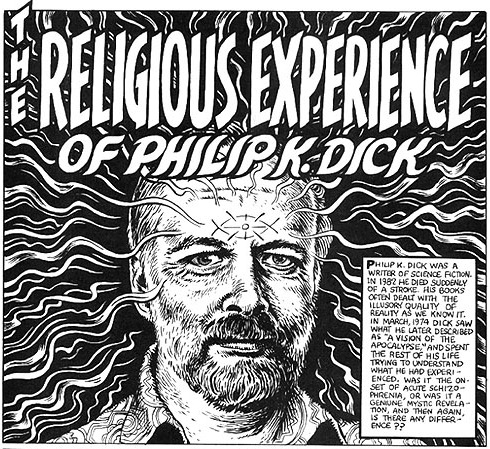
What If Our World Is Their Heaven? The Final Conversations of Philip K. Dick
Edited by Gwen Lee and Doris Elaine Sauter

Philip K. Dick is my favorite science fiction writer. Philip K. Dick is a lot of people’s favorite science fiction writer. I don’t know if it’s because he flatters the reader’s sense that no matter how lost they feel their lives serve a greater purpose or because his great theme was the way in which an individual’s sense of reality may not correspond with everyone else’s. Maybe it’s because he’s less concerned with those who invent shiny rocketships than with those who have to clean them. Regardless, he’s one of the few science fiction writers who is taken seriously by those who don’t read science fiction and with good reason.

What If Our World Is Their Heaven is a collection of interviews Dick conducted a few months before his death. Knowing that he died a few months later adds a special poignancy to the proceedings, whether he is enthusiastically discussing the first big budget film based on his writings (Blade Runner) or describing a fictional character who willingly gives up his life in exchange for spiritual revelation. Beyond that, the book is an interesting example of a mind at work, or, as Robyn Hitchcock once put it “the odd act of a mind trying to explain itself.” Dick describes a novel he would never live to write, working it out while talking about it -- it’s fascinating to witness a writer at work. The novel concerns an alien from a world in which they communicate through color / light frequencies rather than sound, so that when one of them arrives on Earth and confronts sound for the first time, he has no concept of it and is convinced that he is having a religious experience. (Hence, the title of this book). This alien mind invades that of a hack composer who experiences truly beautiful music for the first time, and is willing to give up his life for more.

Dick was adept at talking about epistemology and philosophy, about how we perceive light and sound or the history of ancient religions, all without losing his sense of humor or wonder. Hearing his voice directly, without the filter of his fiction, is a treat for his fans or anyone interested in the “oh, wow!” aspects of science.

Sunday, February 11, 2007

Since You Asked...

In the comments section to the previous entry, Iva (aka my mother) asked:

"Can anyone tell me why we started this war (with any kind of logic at all?)"

Okay - my take on why:

They (not "we") decided that the U.S. needed a Western-friendly region in the Middle East. (When we say "Western-friendly" what we're mainly talking about is "friendly to Western business interests" but our political system is so entwined with our economic system that most in government can not picture one without the other). Basically, they wanted a US-friendly puppet government, similar to what the Soviets created in Eastern Europe during the cold war. In addition to access to Iraq's resources, the US would be able to establish the military bases necessary for gaining more control of the region.

Our other ally in the region, Israel, has never been stable enough for the US to use as a base of operations without creating a full-blown occupation. And Israel's problems are going to get worse, not better. I read an article a while ago that mentioned that Israel's population is declining and a number of younger Jews don't want to live in war-zone, whereas the Palesinian population has been increasing. Within a generation or so, the Israelites will be surrounded by even more people unsympathetic to their cause and in need of what few resources they have. The name "Custer" comes to mind.

So the Middle East was the Gordian Knot and invading Iraq became the answer to all of the US' problems. Want a Western-friendly region in the Middle East but want to avoid a conflict with Islamic clerics? Invade Iraq - a country with a secular leader unpopular with much of the Arab world. Need access to oil to put off the coming energy crisis as long as possible? Invade Iraq - second largest oil reserves in the world. Need a home for military bases from which we can, when the time comes, start moving into other countries? Invade Iraq. Need a country we know we can beat since we did it 15 years ago? Invade Iraq.

I'm sure there were other questions I don't even know about which "Invade Iraq" was the answer. Hussein was a US ally in the 80's - I'm sure he had some dirty laundry that the Bush administration preferred be burnt. It wouldn't surprise me if Saudi Arabia mentioned they'd like a US-friendly Iraq as a buffer between them and the rest of the Arab world.

This sort of theorizing ("We want to control this, how do we do it? If we do this, how will another country react?") is what conservative thinktanks do. It's what they're for: endless theoretical arguments are created, predictions made, schemes hatched. Most of those schemes come to nothing because there's no way to legally put them into practice. But with the carte blanche given to the Bush administration after 9/11, neo-conservatives seized on a rare opportunity and decided to invade another country on manufactured pretenses according to plans drawn up in right-wing thinktanks.

I'm sure the original plan was for a quick war and takeover of Iraq, then, after a year or two, boostered by support from the American public, begin the process again with another country. Syria: maybe. Iran, if feeling particularly ambitious. However, it didn't work. For all their funding and ideas, the conservative think tanks were wrong. No plans for post-invasion Iraq were made because (it sounds incredible) the planners of the war truly believed that the Iraqis would fall in line and create a mini-America once Hussein was gone.

In an interview with Salon.com, Seymour Hersh, author of Chain of Command: The Road From 9/11 to Abu Ghraib, was asked what he thought the real purpose of the war was. Hersh replied:

"...But these guys, do you realize how much better off we would be if they really were cynical, and they really were lying about it, because, yes, behind the invasion would be something real, like support for Israel or oil. But it's not! It's not about oil. It's about utopia. I guess you could call it idealism. But it's idealism that's dead wrong. It's like one of the far-right Christian credos. It's a faith-based policy. Only it wasn't a religious faith. It was the faith that democracy would flourish.

"Q: So you don't think that this is some Machiavellian, cynical, manipulative ...

"I used to pray it was! We'd be in better shape. Is there anything worse than idealism that doesn't conform to reality? You have an unrealistic policy."

So that's my take on why we invaded Iraq: a grand experiment in imposing a "democracy" overseen by the US on an unstable region with a history of inter-tribal conflicts. Neo-conservatives and the Bush administration truly believed that they could transform the Arab world by converting it to a Western-style democracy. Other nations would see how well it worked in Iraq and change their governments and the region would become more stable. It's odd that Bush would be such a fan of democracy, considering how he had to circumvent it in order to become president. But, as I've written before, my cynicism and finding little ironies doesn't help the horror of a situation that has claimed the lives of thousands of innocent people.

Thursday, February 08, 2007

02:42 Imperial Life In The Emerald City


Imperial Life in the Emerald City: Inside Iraq's Green Zone
by Rajiv Chandrasekaran

It’s like something out of a novel by J. G. Ballard: a gated community filled with all the comforts of the western world located incongruously in the middle of a war-ravaged country. Or perhaps it owes more to Paul Bowles, with its tale of Americans, led predominantly by their own naiveté or arrogance, being completely undone by the Arabic world. But it’s hard to imagine a better depiction of why the U.S. occupation of Iraq is, and was always doomed to be, a colossal failure than Rajiv Chandrasekaran’s record of the year he spent inside Baghdad’s “green zone.”

The “green zone” is the heavily fortified base of the Coalition Provision Authority, located in and around Saddam Hussein’s former palace. Think “green” as in naïve or “green” as in money, and you have a summary of the U.S. occupation. After Baghdad fell, the Coalition Provisional Authority were in charge of stabilizing the rest of the country. But many people were hired for the CPA based not on their qualifications but on their loyalty to the Bush Administration or the Republican party. Even some of those interviewed seemed surprised that they were hired and sent to Iraq.

A pattern repeats throughout the book: someone who knows very little about Iraq is hired to help rebuild part of the country’s damaged infrastructure. They are usually well-meaning and have some good ideas, though often inappropriate or unworkable. Once in Iraq, they discover that they are literally starting from scratch: the widespread looting that began after the war, which the Pentagon was warned about and did little to prevent, has stripped much of the country of its basic infrastructure. (Looting is such a common theme that by the time I was on page 100, I checked to see if it was in the index, curious to see how often it was mentioned. Sadly, no entry for “looting.”) Faced with few resources and an almost impossible task, some sink into cynicism while others try as best they can, but achieve little before they return to the U.S.

There are many times in Imperial Life in which the culture clash is so obvious and funny that you don’t understand why those living through it don’t see it. A recent college grad, who knows nothing about finance, is hired to re-build Iraq’s stock exchange. Opportunists win a contact to guard Iraq’s major airport for millions of dollars even though they have never run a security operation before. A media consultant is hired to create a television news service in the country, but soon runs afoul of the military for not broadcasting enough “positive” news about US efforts.

But perhaps “funny” is the wrong attitude to take here. My bemusement at others’ foolishness is tempered by knowing the chaos that the Bush administration has unleashed on that country. It’s hard to laugh about cross-cultural ignorance when said ignorance has cost tens of thousands of people their lives (and that’s a conservative estimate – pun intended). Recently, after a night out, I had a drunken argument about Iraq with a friend of a friend, who quickly resorted to the “isn’t it good that we got rid of Saddam Hussein -- do you wish he was still in power?” “I don’t see much difference” I replied. “He killed thousands of people, and now we’ve killed thousands more. I’m sure the people who died in the war wished he was still in power. We’ve lost that moral argument.”

“Yeah, but things might get better now…” he answered.

Another green zone.

Wednesday, February 07, 2007

Quote of the Day

From over here, I couldn't tell if you were yelling or just complaining.

- Said to me by a co-worker, 2/7/07 1:28pm

Tuesday, February 06, 2007

01:42 Bottomfeeder


BottomFeeder
B.H.Fingerman

FULL DISCLOSURE: The author, B. H. Fingerman, is a friend of mine, though this doesn’t mean that I’ll automatically like his novel. This past year I read a novel by a woman I went to grad school with, and while I admired the craft with which she wrote her book, I didn’t care for the book itself. It’s very uncomfortable when you don’t like the work of friend or acquaintance. It becomes a void all of your conversations dance around.

But I liked Bottomfeeder. The main character, Phil Merman, is a vampire but is neither self-aggrandizing nor self-pitying. He’s just sort of getting on with it. Goes to his job (at night, of course) at a photo archives and occasionally, when hungry, feeds on a human being. Phil preys on those who will not be missed, society’s outcasts, and one gets the sense that this is as much out of a desire to spare a victim’s loved ones any undue pain as it is an attempt to keep his feeding habits private.

Without being obvious, the book poses a basic existential question: what exactly do you do with your life? The fact that the vampires in the book have eternal life only compounds the problem for them. There are those have enough trouble filling 70+ years. But perpetual existence? Some sink into decadence, some make attempts to help other vampires, and others (like Phil) just live their existence day to day, without too much consideration of where they are going and what it all means.

Bottomfeeder is also a good New York novel, one that actually has scenes in Queens and Brooklyn as well as Manhattan. It captures the “Let’s Make A Deal” feeling in New York that anything could be behind any door. It could be an orgy or it could be a group therapy session. As one who still walks around Chinatown thinking to himself “I just know there’s an opium den around here somewhere” this sense of New York’s chaotic yet stable mix felt true.

The above description doesn't hit at how funny the book is. Phil’s point of view is sardonic and bemused by the actions of both the living and the undead. The voice recalls a tough guy private eye, and this could be both an homage to pulp novels and a comment on how such genres have influenced how we think and talk. There’s a sense of characters wanting to play at what they are not. Whether it’s a vampire orgy that Phil senses is just trying too hard to be “bad,” or an annoying friend who speaks with a British accent even though he’s not British, everyone seems to be trying on a persona, and Phil is there to helpfully mock them.

Sunday, February 04, 2007

New Graffiti Murals From My Neighborhood


Okay, the last one is actually not from my neighborhood but from the East Village. No, I don't know what it means, either.

Tuesday, January 30, 2007

0:42 Knew Your Resolution

I never intended two and a half months to lapse between posts. I've been kinda busy without doing anything special. The holidays took some time and my job has been fairly hectic, but the main reason I've been so mum is there just wasn't anything I wanted to write about.

I post here when I have something to share. I don't see this site as a private diary made public or as my daily speaker's corner to kvetch about the state of the world or what I saw on tv last night. That's why we have email, the phone and dinner with friends. It may not always be apparent, but I do put some effort into these entries, at least re-reading them before I post. Despite my grammatical blunders, I always (pretentiously?) thought of this online journal as the equivalent of an op-ed page rather than chatty gossip on the phone and there hasn't been much I've wanted to op-ed about.

Which brings up something else I've never been interested in: New Year's Resolutions, a concept that combines two of my least favorite things, self-discipline and the passing of time. However, I have made a resolution for 2007 and will be writing about it as the year progresses. My goal is to finish 42 books by December 31st. For those who know me, this may seem like no big deal, but it will actually take some work. I think I am more bibliophile than reader; in other words, I love books as objects as much (if not more) than I do the act of reading. I realized this while traveling in Europe and spending lots of time browsing in bookstores, examining volumes I couldn't possibly read. Read, schmead: I was fascinated just by the look of Italian paperbacks, Portuguese novels and French art books.

For over ten years, I've been writing one or two page reviews for each book I finish. This started because one year I couldn't remember much of what I had read. I knew I had read something and assumed I enjoyed it, but only by slowly looking over my bookshelves was I able to recall what I had read. I found that writing brief book reports made me pay more attention while reading and enriched the experience. It's from these book reports that I know that I usually finish around 20 books a year. Not a bad number, I guess, but it's not a lot. This average - less than two books a month - is due to how easily distracted I am by other media, mainly film or internet based.

Some rules: note that I said I would finish 42 books this year. This means including things I started last year but didn't finish. Everything I chose has to be new to me: no re-reading. Graphic novels don't count. (This is a shame, because I'm really enjoying Buddha by Osamu Tezuka.) Art books will be considered depending on how much text there is.

Why 42? It seems like a good goal. It's achievable (unlike trying to write a novel within a month) without being too easy. It's double what I can do without trying, plus a 10% gratuity.

It's also, according to Douglas Adams, the Ultimate Answer to the Great Question of Life, the Universe, and Everything:
According to The Hitchhiker's Guide to the Galaxy, researchers from a pan-dimensional, hyper-intelligent race of beings constructed the second greatest computer in all of time and space, Deep Thought, to calculate the Ultimate Answer to the Great Question of Life, the Universe, and Everything. After seven and a half million years of pondering the question, Deep Thought provides the answer: "forty-two." The reaction:

"Forty-two!" yelled Loonquawl. "Is that all you've got to show for seven and a half million years' work?"

"I checked it very thoroughly," said the computer, "and that quite definitely is the answer. I think the problem, to be quite honest with you, is that you've never actually known what the question is."


--Courtesy of Wikipedia
The other reason I've chosen to read 42 books this year is that I will turn 42 in June. I've never really cared about the standard milestone birthdays, whether dictated by the decimal system or by society (16, 21, 35, "it was a very good year..."). I was more impressed when I was about to turn 34 because, as I put it, "I've outlived the Lord!" "Yes," my sister Julie replied "but look at all that He achieved by the time He was your age."

Ah well. So I will be posting about my progress throughout the year, this resolution has the side benefit of making me post to "The Hanged Man" more often. I will, of course, also be writing about my usual misadventures, such as thinking I know what Dutch babies are saying, buying artwork while drunk, and spilling things on myself.

Hope everyone has a good 2007.

Thursday, November 16, 2006

I Knew Someone Who Knew Someone

On the first of this month, I received an email from my friend Kate. She was upset over the death of her friend Brad, an activist who had been murdered by a paramilitary group in Oaxaca, Mexico. Brad traveled around the world for Indymedia documenting political and social struggle in areas ignored by the mainstream media. He was on the lines of a teacher's strike in Oaxaca when the military opened fire, and was killed by a single shot to his abdomen.

Kate had included a picture of Brad with her email and after clicking on the file, I thought "My God, he looks familiar. I think I met him." I got my current apartment through Kate. There was a birthday party for her the last December she lived here...three years ago? Four? (At what point did time begin moving so quickly?) Anyway, it was at this party that I met Brad. I had a nice conversation with several people there but can't recall if he was one of them. It may just be that his presence was noticable whether you spoke with him or not. He was tall and lanky and cheerful.

The cover story of the Village Voice this week is about Brad's death. Appearantly he was well known enough and his work was respected enough within progressive circles that his death has been quite a shock to that community. I emailed Kate to warn her that she might want to avoid the Voice this week. Losing someone you cared about is difficult enough without having to be reminded of their death every time you pass a newstand. I also understand that grief, despite how it feels at the time, is not eternal and told her I would save a copy of the issue for her. It is something that she may want one day and this is a case where reading paper is more satisfying than reading online.

The cover of the issue is a painting of Brad but you don't have to be a lapsed Catholic to recognise it's also a Christ image. I put it on the pile of things "to be read" in my kitchen, but I find it too eerie and heartbreaking to have the paper facing up in the same room where Brad relaxed and laughed with friends just a few years ago. I turned the paper over and lit a candle.

Wednesday, November 08, 2006

Nature or Nurture?

I am definitely my mother's son. The email she sent me yesterday on election day concluded:

Please God, Rick Santorum will not only lose, but he will fall off a twenty story building tomorrow. I'll keep you informed.

Mom


I should point out that if Santorum had fallen off a twenty story building, I would have heard about it on the news, although it is nice that my mother planned to let me know. However, re-reading that passage, it sounds vaguely like she's ordered a hit on the man. If she had, well, I would be the proudest son in the world.

Ah yes. I drank in Santorum's defeat like a fine wine. Literally. When it was announced that he had lost I grabbed an open bottle of wine from the table and took a satisfying swig, too happy to wait to pour it in a glass. My friend Karl (Heitmueller, not Rove) had had a get-together to watch the election returns and finish off the booze and candy left over from Halloween. Heading over, I expected a glum night, convinced that Republicans were going to steal the election. I've never been so happy to be wrong. When I got home I flipped from channel to channel, staying up late to wallow in the Democrats' victory. Plus David Cross was on the Carson Daly show. He was funny.

When I went to vote yesterday I got bounced from polling place to polling place. This didn't seem the product of a sinister conspiracy so much as basic human incompetence. Riding the subway to work afterwards, I read the following passage and it seemed appropriate for election day and what some people think this country should be like:

Cargo cults have have sprung up again and again in the Pacific. During World War II, American forces arrived at the island of Tana to recruit a thousand men to help build an airfield and army base on neighboring Efate Island. When the workers returned with tales of white and black men who had possessions beyond the dreams of the people of Tana, the whole society was thrown into turmoil. The islanders, many of whom had earlier been converted to Christianity by British missionaries, stopped going to church and began to build landing strips, warehouses and radio masts out of bamboo, in the belief that if it worked on Efate for the Americans,it would work for them on Tana. Carved figurines of American warplanes, helmets and rifles were made from bamboo and used as religious icons. Islanders began to march in parades with USA painted, carved or tattooed on their chests and backs. John Frum emerged as the name of their Messiah, although there are no records of an American soldier with that name.

When the last American GI left at the end of the war, the islanders predicted John Frum's return. The movement continued to flourish and on 15 February 1957, an American flag was raised in Sulphur Bay to declare the religion of John Frum. It is on this date every year that John Frum Day is celebrated. They believe that John Frum is waiting in the volcano Yasur with his warriors to deliver his cargo to the people of Tana. During the festivities the elders march in an imitation army, a kind of military drill mixed with traditional dancing. Some carry imitation rifles made of bamboo and wear American army memorabilia such as caps, T-shirt and coats. They believe that their annual rituals will draw the god John Frum down from the volcano and deliver the cargo of prosperity to all of the islanders.

--from Breaking The Spell: Religion As A Natural Phenomenon by Daniel Dennett

Monday, November 06, 2006

Whew!

So yesterday I stopped by the gallery to pick up the painting I bought while drunk. [As recounted in this entry]. It goes without saying that I was a little concerned. What if the painting was not quite as impressive as it had seemed on that night several weeks ago? I had thought of going to the gallery to look at it with clear eyes, but decided I would just leave well enough alone. If the painting sucked then I would deal with it when the day came. Well, that day was yesterday and...the painting is even better than I remembered. My first emotion was a sense of relief, which was rapidly followed by the sense of pleasure created just by looking at it. So...whew! Dodged that aesthetic bullet.

I know I don't post here that often. Unlike others with online journals, I don't think of these entries as a private diary made public so much as I think of them as pr or intentionally public dispatches. In other words, I never for a minute fool myself into thinking that what I write is private or personal no matter who reads this site. So when I post here, it is something that I want to share. "Don't mind sharing" might be the more accurate way to put it. This tends to limit the number of things I offer for public consumption, even if my public loves me.

However, it looks like I will be posting a little less this month, if that is possible. Most of my free time will be spent trying to write a novel. My friend Kate talked me into participating in National Novel Writing Month (NaNoWriMo for short). It is a group that tries to inspire people to write a short novel of 50,000 words during the month of November. The idea is: just write. You have to get in the habit of producing (at least 1,666 words per day, but who gets a chance to write every day?) without worrying about whether it's as good as your favorite author or what people will think of it. Assume no-one will ever read it and just write.

As someone who doesn't do anything unless he has a deadline looming, it is ideal. Unfortunately, why the group picked November of all months, I'll never understand. In addition to having one less day than most other months, it also contains Thanksgiving, which eliminates several days for anyone who travels or has other obligations. But if you keep waiting for the perfect time to write, you may never actually write.

I need some sort of deadline to get most anything done. But paradoxically, whenever I have something I feel like I have to do, I'll avoid it as long as humanly possible. Hence, the length of this entry when I should be working on my novel. Hence, the fact that this weekend I cleaned the apartment, ironed my shirts and finally sealed the cracks along the floors and floorboards that were letting in cold air.

So even if I don't finish my novel by the end of this month, at least all my other chores will be completed. I should point out that my word count is currently at 4,277, whereas my 16 year old nephew TJ is at 6,540.

And no. No-one gets to read the novel when it is finished.

Thursday, October 26, 2006

And Why Am I Doing This?

A pattern has emerged. Twice this week, in the early hours of the morning, during the weird state between sleep and wakefulness, I have found myself trying to create sentences that don't contain the letter e. I have no idea why this is happening. I'm not perturbed with any of the people I know whose names begin with the letter e (my sister Erin, my nephew Eric). It's such a truly odd event that it really makes me contemplate how our brains work and why they sometimes don't seem to, or seem to have a mind of their own. Really. Of all the things to do before begrudgingly getting out of bed and getting ready for work, why craft sentences that ban one letter? I should point out that I never get very far in these sentences before I hit a point where the only word that will suffice is one that contains the dreaded letter. Then I get frustrated and start again.

There was a writer, George Perec, who wrote an entire novel A Void that does not contain the letter e. Perec believed in art as a sort of game. He would create arbitrary and difficult rules for his work, thinking that the true creative act came from working within the confines of these rules. After completing A Void, Perec did the only thing a true smart ass could: he wrote an entire short story in which the only vowel used is e. That's right: a coherent (thought that word didn't appear) short story without the letters a, i, o, or u.

Is it difficult to do?

To fashion a thought that says what you want to say but not tripping up on your individual ban of an important, if not mandatory, bit of information -- this is not child's play. If it wasn't difficult, I would float through many additional hours in my own land of nod during past mornings. But no. A task that cuts through sloppy thoughts, its origin in play, soon slips into compulsion and the gifts of your night's forty winks quickly vanish as said compulsion is paramount. So I'll stop now, a happy solution that acquits your's truly of this limiting task and may spawn much calm...until my alarm clock rings.

Friday, October 20, 2006

Shopping While Under The Influence

Soooo...I bought a painting last week while drunk.

Not drunk, exactly, but I had a couple of beers with dinner. Because I don't imbibe much anymore, my tolerance is low (something friends have been saying about me for years). In any case, I woke up Saturday morning with a headache and then slowly remembered "Oh yeah. I bought a painting last night."

A friend of a friend used to order from amazon.com during his benders. A box of books would mysteriously arrive, usually during mid-week. "I don't remember ordering this" he'd think. "I want it, but I didn't order it." Then he would check his history at amazon and discover that an order was placed from his computer in the wee hours of a Saturday or Sunday morning, a time that he had no recollection of.

On my way home after dinner last week, I stopped in a neighborhood art gallery which was having an opening. This was probably a mistake. It wasn't an impulse buy: I recall taking time to decide between two paintings as to which one I liked better. I chatted with the gallery owner, who was carrying her newborn at the time. I asked her if I should negotiate the price with the baby. A dumb joke, but she laughed. She complimented my taste (cause that's what gallery owners do) and introduced me to the artist who I suspect was drunk, too.

Happily, the painting isn't expensive and I can afford it. To the best of my recollection, it's a good painting although I am a little nervous about picking it up the first week of November. I'm afraid my reaction might be "what did I see in this?"

Monday, October 16, 2006

The Stained Man

From the comment section of the previous post:

Number 2 Sister said...
What the hell is with this new subtitle --"Refutation and Overthrow of Falsely So-Called Knowledge" ?! Sounds kind of arrogant. If I didnt' know "The Hanged Man" was you, I'd keep right on surfing after seeing that subtitle.

I was really partial to the former subtitle that referred to spilling things on yourself. It was humorous. It was humble. It was true.
(factoid for anyone not related to us: All of the Hughes progeny spill on themselves. It makes our wedding dinners easy to find in over booked hotels. Just look for the room full of people with stained shirts and you're there.)


Oh believe me, I'm still spilling things on myself. In fact, just last week I was talking to a co-worker about something work-related. When I finished, she nodded her head and then pointed to my chest: I had slopped red marinara sauce on my white shirt. I responded the only sensible way. I yelled "Goddammit!" and got some club soda.

The new subtitle is not my original. I stole it, word for word, from the title of a five-volume book by Irenaeus, the second century Christian philosopher. "Refutation" was his interpretation of the four gospels, and was influential on the council at Nicea when they decided what beliefs would make up the Catholic (ie "universal") Christian Church. In the early years of Christianity, there were many sects, each with varying interpretations of Christ's words and actions. Irenaeus sought to establish an orthodox system of beliefs, and made plain that those who strayed from these beliefs were heretics. So if the title sounds arrogant, well, take it up with Irenaeus.

Personally, I thought it was funny. In these days when language is used to completely confuse and obscure (ie - "The Clean Air Act" which actually increases the number of pollutants allowed in the atmosphere) something about the strength and the directness of the words amused me, not to mention how completely inappropriate they were for this website.

I never intended the subtitles to be permanent, so I'll probably be changing it soon.

Fun with SpellCheck: For "Irenaeus," "ironies" was suggested, and the "Nicean" Council should actually be the "Nice" Council.

Sunday, October 08, 2006

Little Life Lessons from Turner Classic Movies

The following descriptions of what's playing on Turner Classic Movies this month actually provide some truisms about life.

"A young doctor tries to keep a neurotic beauty from being committed."

"After marrying a drunken playboy, a young girl tries to capture his heart while he's sober."

"A society woman courts heartache when she falls in lover with her chauffeur."

"A ruthless financier will stop at nothing to control a 100-story office building."

"A father's blind devotion turns his son into a lying cad."

"A failure in the U.S. defense system threatens to start World War III."

"A hat-check girl gets rich quick when she saves a millionaire's life."

"A possessive son's efforts to keep his mother from remarrying threaten to destroy his family."

"A plain young woman's money makes her prey to fortune hunters."

"A scarred veteran and a homely woman are transformed by love."

"A young priest revitalizes a failing parish and brings new life to the elder priest."

"An ambitious duke uses his executioner henchman to kill his way to the crown."

"A detective tries to solve a murder in a house full of suspects."

"When she's branded as a 'bad girl' a troubled teen fights for her parents' approval."

"A good girl raises her popularity when pretends to be bad."

"A young girl dreams of winning acceptance from a gang of surfers."

Tuesday, October 03, 2006

Here's Gin In Your Eye...

In the comments section of the "Unfortunate Trend" post, Erin said:
I think it's nice that you ran into two exes and neither one of them yelled at you are threw a drink in your face.*

No, no, never had a girl throw a drink in my face -- never dated Bette Davis. I did, however, have a guy throw a drink in my face once. Not coincidentally, he did great impressions of Bette Davis, both pre- and post-stroke.

In my early twenties I had gone to visit college friends who happened to have HBO (a luxury in those lean years, but no, that's not why I went to visit them). While there, we watched several episodes of "Kids In The Hall" and was I surprised to discover how funny the show was. I had previously seen an episode on a "free-HBO" weekend, and thought they kinda blew -- nothing worse than comedy that tries too hard. But I liked what I saw on second exposure.

Shortly after, I was at a party and regaling my friends Ben and Cindy with my badly-remembered renditions of the skits I had seen. I was telling them about "Running Faggot," which featured a catchy song about a folk-hero homosexual who dressed like Davy Crokett and ran from town to town, solving the frontierspeople's problems ("He stopped the carnage / by gettin' folks a talkin' / 'stead just a sqawkin'/ sqawkin' and a gawkin'" and "See the faggot / he feed a puppy"). However, I was singing this song within earshot of my friend Will, who was gay and expressed his displeasure with my cavalier use of the word "faggot" by throwing his Tanqueray and tonic in my face. "Oops," he said. "I guess my hand just slipped."

While wiping the gin from my face, I tried explaining to Will that the song came from a skit I had seen on tv, and that he would probably love the show too, etc etc. He wasn't having any of it. It didn't help my cause that Ben and Cindy found the slapstick of my getting doused funnier than any of the skits they were hearing about second-hand. I was eventually vindicated: Will did become a big fan of "Kids In The Hall" when he saw them.

I could be wrong, but I don't think there's anyone whose first impulse would be to throw a drink in my face -- a fact I would like worked into my eulogy, if possible.


*I recognise the use of "are" in this sentence is a typo, unless my sister has begun speaking like a pirate. Ahhh...and wouldn't that be great?

Sunday, October 01, 2006

Recent Readings

Two passages I liked from my recent reading. One short, one long. One sacred, one enjoyably profane.

"During the summer of 1585, [King Henry III of France]'s mother, Catherine de Medicis, a brilliant diplomat despite being in her sixty-seventh year and riddled with syphilis..."
The Pope and The Heretic* by Michael White, pg 83


"...one of the Buddha's disciples went to him and asked to be shown Heaven. The Buddha said, "If you want to see Heaven, you will have to see Hell first." The disciple agreed. The Buddha took them to Hell, when an enormous banquet table was set up, piled high with fabulously delicious food. Unfortunately, all of the diners had, instead of hands, enormously long forks on the end of their wrists, and they kept trying to get the food into their mouths, but could not reach them. They wailed and gnashed their teeth in misery. The Buddha then took his disciple to Heaven. Heaven was exactly the same situation -- diners at a sumptuous banquet table, with long forks on their wrists instead of hands. The only difference was that, in Heaven, everyone was feeding each other."
2012: The Return of Quetzalcoatl by Daniel Pinchbeck, pg 330-1


*No, it's not a romance novel.

Monday, September 25, 2006

An Unfortunate Trend

The same thing has happened to me the past two Fridays. I went to an event to see/show support for a friend...and ran into a girl I used to date but don't anymore (different girls women each night).

Seeing them wasn't unpleasant. I even had a nice talk this past Friday. However, I just want to say that this is a trend that I would like to end. Right now.

That's all.

Wednesday, September 13, 2006

Another Look At The Horrific World of Our Ancestors

A time of interspecies cooperation amongst our inferiors, unnatural mutations, breaking wind instruments and well-meaning ginks who don't write as often as they should.


Monday, September 11, 2006

Emails From 5 Years Ao

From: j h [mailto:jmh666@yahoo.com]
Sent: Tuesday, September 11, 2001 2:20 PM
Subject: I'm fine

Just wanted to let people know that I'm fine. I was sleeping in my bed when the planes hit the towers, and I was watching on tv when they collapsed. There's a "profit" outside my window yelling something about "everybody go home" and something about "booty," and I can hear the jet fighters fly overhead.

Now I'm gonna go give blood.

John

******
From: "Troy and Andrea Collins"
To: "j h"
Subject: Re: i'm fine
Hi, Glad you are fine.

I knew you guys were okey dokey cause I had emailed Stacey from work. I had told her I was trying to think were you all would be at that time o the morning.

we got sent home from work, I think because our building is next to the courthouse, which shut down and posted guards.

I guess some guys are thinking about booty even during terrorist attacks.

mrs collins


******
From: j h [mailto:jmh666@yahoo.com]
Sent: Tuesday, September 11, 2001 2:29 PM
To: Burk, Kris
Subject: RE: I'm fine


I don't think the awfulness of the situation has fully hit me yet. In my neighborhood, it's a beautiful Fall day, and that goddamn kid is riding his noisy motorscooter like always.

Then I watch tv, and it's like I'm watching someplace far away, instead of a couple of miles away.

You be careful--DC is as much a target as NYC...

John

******
Subject: RE: I'm fine
Date: Tue, 11 Sep 2001 14:39:21 -0400
From: "Burk, Kris"
To: "j h"

I know. It hit me pretty hard when I heard about it on the way in but then I didn't really let all of the horror in. I couldn't look at any of the photage until around noon. I'm also worried about what comes next.

I'm a kind of afraid to go home. Jeff says there are jet fighters flying around there, too. He's not as nervous for some reason.

And it's such a beautiful day.

Is the prophet the one riding around on the noisy scooter?

Yes, go give blood. Take a book. They told us here not to go until tomorrow because they are so backed up.

You be careful, too. And keep in touch.

Kris

******

--- Troy and Andrea Collins wrote:

Glad to hear you were asleep for it all, I was especially worried about Stacey.
We haven't heard from her since this morning. I guess Andrea emailed her right
after it happened and she said she wasn't sure when she would be able to leave.
I'm assuming she's in the process of trying to get home right about now.

If you hear anything let us know.

tr0y

******

j h wrote:

I talked to her on the phone this afternoon. Her office was evacuated, and she had to walk home across the 59th Street Bridge. Feelin' groovy, indeed.

But she is okay. She went to hang out at a friend's house (in Brooklyn, a few blocks from Stacey's apartment) tonight.

John

******
Forwarded Message
From: Offen4@aol.com
Date: Wed, 12 Sep 2001 10:48:40 EDT
Subject: Re: World Trade Center
To: IvaHan@aol.com, Jaecrn492@cs.com, robtafeld@yahoo.com

Iva, Bobbi, Juleann--we are fine, sort of. I'm sure Pete told you his whole story, closing the bridge, etc. Justin had the horrific event of walking south on 6th Ave.(in the Times Sq. area) from his office to his apt. when the second tower collapsed. Everything around him stopped, cars banged into each other. The people in the cars got out, people walking just stopped and stared, crying. And over all, just perfect silence. Nobody could say a word. Lines 30-40 deep at the pay phone he passed.

Justin's roommates work in the financial district. One escped form Building Seven (that later collapsed) and had to run down from almost the top floor. Another (Blake) arrived home competely debris covered from the collapse of the towers. Blake had a friend on the 103 floor of one the towers. He had to run through a fire to get out. He is hospitalized, but will be okay. These guys will never be the same.

Heather's concern is for her students, many of whom have parents in the financial district. She was very upset both times we talked to her. I'll talk to her tonight, so I'll let you know what happened.

Bye for now,
Love, Ronnie

******
From: IvaHan@aol.com
Date: Wed, 12 Sep 2001 11:16:20 EDT
Subject: Re: Thank God
To: jmh666@yahoo.com

Dear John,
Take a good book and shut out the world as much as you can while in the park. I have been following the news too, and the way the New Yorkers have responded is truly magnificent. This city where people say that no one gives a damn about others, this city whose image is (or was) so bad that there are people who are "afraid" to visit, has put a whole new face to the world. It has shown the world that people are people; they care deeply about others, even if they don't know them personally, and they will go out of their way to help in any way that is possible. God bless New York and its people.

TJ's first question when he hopped off the school bus was, "Is Uncle John all right?"

For myself, I could not help but remember the St. Patrick's Day parade. All those "bonny" lads marching along; I wonder how many of those faces will be absent next year. To say it is tragic is to understate.

Well, enough of my ruminations. Do be careful, my love, and I will talk with you later on.
Mom

******

Date: Thu, 13 Sep 2001 19:04:16 -0400
From: "Troy and Andrea Collins"
To: bimbambaby@earthlink.net
CC: "Stacey Stambaugh" , "Ron Leik" , "John Hanlon" , "Cindee Rehm"
Subject: Re: Folks, Critters 'n' Varmints

K -

After quite a bit of domestic yard work chain sawing old, uprooted bushes into pieces and then doing some sanding/primering to my fragile old automobile ... I find my tender little fingers tired after my full work day and then some, but I felt the need to respond to your
email anyway.

First off, in general, I just want to say I agree whole heartedly with you, but of course.

It's been very interesting (read : scary) watching my red blooded co-workers get increasingly incensed by this thing as each day passes. Sometimes they partially listen to me when I try to explain to them the complexity of the situation at hand, like how this is the sort of event the rest of the world has been dealing with for years, and now it's just our turn to deal with it. Albeit naturally, on a hell of a lot larger scale (talk about baptism by fire), and with trying to find and deal with an amorphous and almost invisible enemy. (I spent three hours last night online reading about Bin Laden, quite unbelievable. I knew a little bit before, but man are we in for a difficult time)

Their response is usually something along the lines of hoping to see the entire Middle East on fire, "kill them all, then they won't have nothin' to fight about anymore", yes, that's right : Jews, Muslims, Niggers, you name it send 'em all over there and then kill 'em all. I even heard one guy talking about wishing they'd send Jesse Jackson and Al Sharpton over ... and use all the countries' welfare money to rebuild New York ?!?!?!?

I'm not even quite sure how it is their brains function sometimes. If at all.

But I digress ...

Yes, Bush looks completely emotionless. Like a fucking robot even. I can't even figure out if he's annoyed that it's interfering with his formerly uneventful presidency or if this is some sort of "I'm gonna' finish this one for my Pa" type scenario. I can't seem to figure
out, or even develop a gut reaction as to whether or not he's going to blow it and just do a half assed job like big daddy did, or if he's going to start WWIII ...

His recent comments lead me to believe that we might be in for some really serious shit.
I certainly hope not, but all signs point to a major event. I think he might over step his bounds to try and make a point, and that's where it could all go wrong.

Although they did after all attack NY and DC, and that shit only happens in the movies ...

Not in real life.

Everything is so very different now.

I still have trouble believing it, it still seems so surreal.

tr0y

Tuesday, September 05, 2006

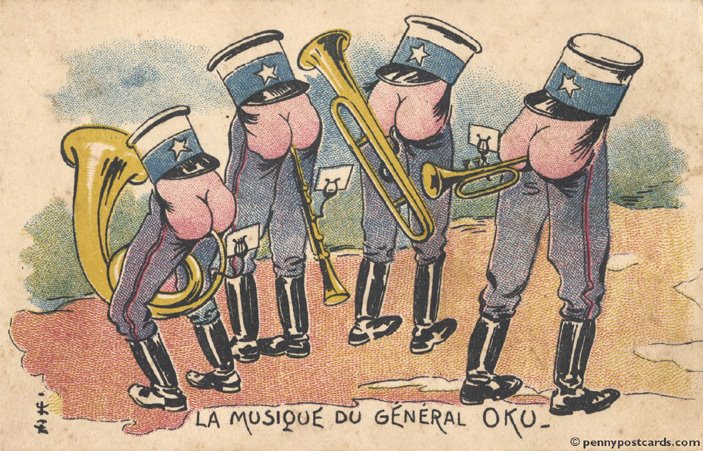
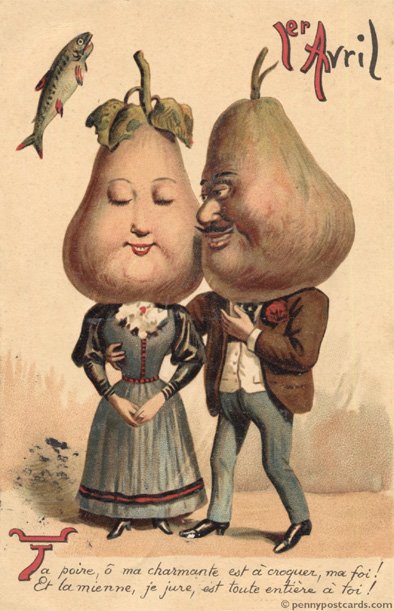
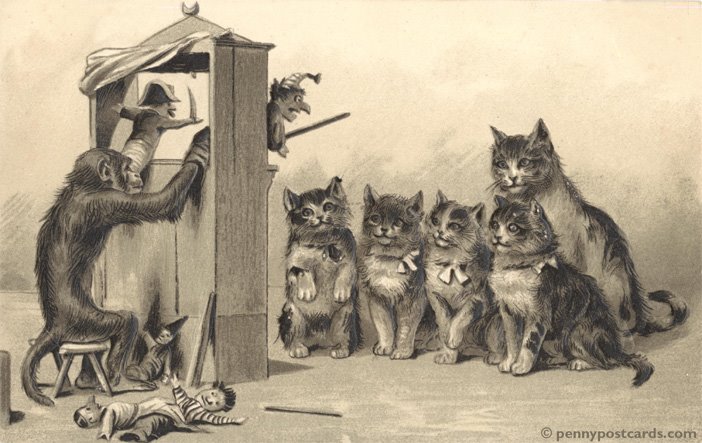
If Hieronymous Bosch Was God...

This is what our world would look like. Instead, they are just visions from penny postcards created by our fucked up ancestors.

Yes, I was bored at work today.


Monday, August 28, 2006

Now I'm a New Yorker

The old saw is that you're not a New Yorker until you've lived in the city for ten years. My anniversary passed last November 1st, while I was on a train from Naples to Venice.

The most obvious change is my impatience with the slow moving people on the subway platforms in the morning. Jesus, why can't some people move? Thank God I don't drive.

But last week I received the strongest symbol of my new persona. I had an anxiety dream about not being able to get a cab when I needed one.

It's official. I am now a New Yorker.

Tuesday, August 22, 2006

Turkey Club = Gift From God

I've started going to church again. Yes, I can hear all my non-believer friends (who are legion) groan, roll their eyes and shake their heads. Okay, I can't hear them roll their eyes or shake their heads, but you get the idea. I remember once when my friend Bob was talking about a poll that revealed most Americans believe in God. He was offering the poll's results as proof of how alienated he and his friends are from the mainstream. "I don't know anyone who believes in God" he concluded. I sheepishly (though not in the "Lord is my Shepard" sense) raised my hand. I explained that my belief varies from day to day. Monday; peaceful existentialist. Tuesday: hopeful mystic. Solomon Grundy has nothing on me.
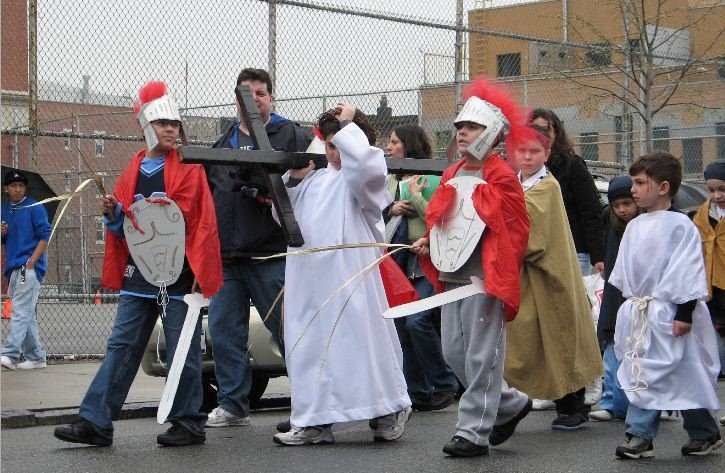
My return to church is not due to a spiritual reawakening but rather to a matter of honor. I am my nephew Eric's godfather, which, in the Catholic Church, isn't just an honorary title but a commitment. I agreed (without knowing it at the time) that I would bring up Eric in the Catholic faith should anything happen to his mother or father. Since Eric's mother and father are both alive, this is a fairly easy obligation. The only time it is a problem is when Eric is of age to receive any of the sacraments. Then his Godfather is expected to be a Catholic In Good Standing, complete with a letter from a priest testifying to the fact.* When Eric was to be baptised, I had to go to the priest at the groovy multi-faith center at American University (where I was in grad school) and ask him to write a letter on my behalf. Basically I lied. When he mentioned that he didn't recognise me from services, I assured him that I was a faithful member of the parish. He wrote the letter, and proof that I was a true Catholic, I felt very guilty about it after the fact.
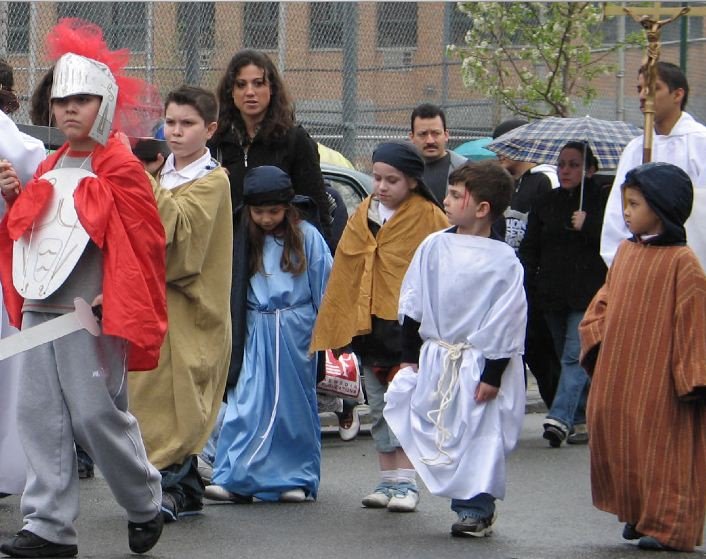
Within a year or two, Eric will be Confirmed in the Holy Roman Catholic and Apostolic Faith. As his godfather, I hope to "stand" for him, and towards that end, I have begun going to church again to establish my Catholic credentials. I just don't feel like lying to a priest again.

I found a church in my neighborhood that has English-language Mass on Sunday's, albeit with an accent I can't quite place. I've gone the last few weeks and while it's not as satisfying as the church in Spanish Harlem (which had a congregation of Hispanic families that would pack the hall, overseen by a fiesty Irish priest who made a point of commemorating the 20th anniversary of AIDS and its victims, as well as writing angry letters to city councilmen about the rat problem in Spanish Harlem), it is not as soul-draining as the church I grew up in. I like it. It's peaceful...and while I was walking to church this past Sunday, I found a $20 bill on the sidewalk! Proof that the Lord rewards those who honor Him/Her. After mass, I rewarded myself with a turkey club at a local diner. God it was good.

Now, that would be the end of my "do well and you will be rewarded" theory, but tonight, while I was walking home, two girls asked if I would help carry their heavy tv up two flights of stairs to their apartment. I said sure. We then had to wait for them to ask another unsuspecting guy walking down the street. She had asked some guy sitting on the stairs to his apartment building, but unconvincingly said that his back couldn't take carrying a tv up a flight of stairs. I suspect the real reason is the he was an asshole. Even if he had carried the tv upstairs, his striped rugby shirt (which no man should wear once they're old enough to attend a prom) would have signaled him an asshole. Happily, a pleasant gentleman soon wandered down the street, and before long, he and I were soon lugging the tv up to a second floor apartment.

I think one of the main reasons I was so willing to help out was that I was once in a similar situation. When I bought my present tv (flat screen, beautiful image, heavy as lead), one of my neighbors (who I didn't know) volunteered to help me carry it up to my third floor apartment. So it was the golden rule in reverse: do unto others as others have done unto you.

After lugging the tv upstairs, one of the girls thanked my and pressed $20 in my hand. Despite my protests, she insisted I take the money for helping out. I fough the temptation to wave it in front of the face of the stair-sitting, rugby-shirt wearing asshole. Instead I reflected on what seems to be a new spiritual law: Do the right thing for other people, without any expectation of reward, and you'll get $20!

And to think some of my friends don't believe...


*Happily, stigmata is no longer a requirement.

Sunday, August 20, 2006

Immortality Is Mine


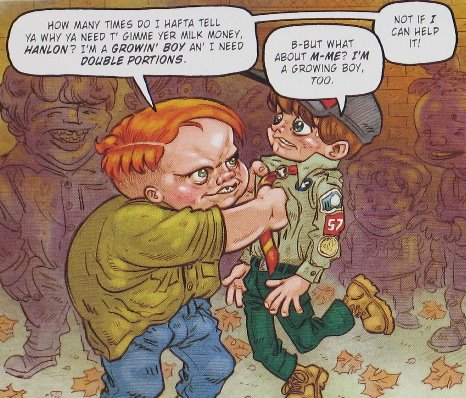
That's a panel from my friend Bob's new book Recess Pieces which you can buy here. I'm mighty flattered to have a character named after me, although the character based on Bob gets to ogle a dirty magazine and is later kissed by a girl, whereas I get beaten up by the school bully. Hmmmm...

Recess Pieces is best described as Little Rascals meets Dawn of the Dead, or Peanuts trapped in an old EC horror comic. Bob got the idea during a conversation he and I were having, talking about how contemporary horror movies are just a series of elaborate set pieces demonstrating clever ways to kill people. The audience is primed to enjoy the victims' deaths rather than feel any empathy or horror. The real subversive horror movie would make you care about the victims so that when they died, you would feel sick. "Yeah" Bob said. "It would have to be about monsters threatening someone that no-one wants to see hurt, like little kids and puppies." You could almost hear the click go off in his head. "Yeah...monsters attacking little kids and puppies..."

So it's been cool watching the book grow from his initial idea. Every time I went to his apartment, Bob would have new pages done and I got to see the story shift from nostalgia about the horrors of grade school to real horror at a grade school. Now it's a book. A pretty gory book, I should point out. Zombies eat people, and that entales lots of entrails.

Why a boy scout? Well, I was late meeting Bob for dinner once because I was literally helping an old lady cross the street. I was walking through the East Village, she asked for help and I was happy to oblige. However, it took her so long to cross the street (I have never seen an upright person move so slow) that I was noticably late for dinner. Bob had mentioned that he was going to name one of the kids in the book after me. When I told him why I was late, he said "Then your character will be a boy scout!"

Congratulations, Bob. Looking forward to a sequel.

Monday, August 14, 2006

Subway Anomaly

While riding the packed L train last week, I noticed a guy wearing a ball cap that depicted a stick figure with cartoony large hands and feet. "Big hands...big feet...You do the math!" it said above the stick figure. After rolling my eyes, I noticed that the man wearing the cap didn't have particularly large hands - in fact, his hands were on the average to small size. So what exactly is his hat trying to tell us?

Friday, August 04, 2006

Coney Island

Coney Island, land of abundance where nothing is real, except for the condom that I found floating on the surface as I got out of the water. I'm pretty sure that was real. It was not one of mine.

Many Homers, lots of Patricks. We saw a cop eating three hamburgers, one after the other. We saw not one but two little girls who got separated from their guardians. Giant hamburgers, "alive" chimps, Miss Coney Island under glass who, for a quarter, will dance to "If I Fell" by the Beatles, and a display where past and present mingle and olde-timey beach goers ride swings, cheerfully oblivious to a human sponge on his back, staring at the sky.


Thursday, July 27, 2006

Mined

A thunderstorm last Friday seems to have knocked out my internet connection at home. Through process of elimination I am slowly figuring out the source of the problem and hopefully how to fix it. (The ethernet connection on either my computer or my cable modem is fried - I just have to determine which one). I mentioned this to my friend Karl, bemoaning the fact that I can't get online at home.

"Well, let's see," he said. "You only update your blog once a month or so..."

Alright, alright. What can I say? I'm someone who's quite content keeping his thoughts in his head rather than on display for the whole world to see. Right now I'm reading 2012: The Return of Quetzalcoatl by Daniel Pinchbeck, which uses the fact that all Mayan calendars end with the year 2012 (which means that, you know, the world might end then) as a starting point (as opposed to end point) to consider crop circles, ufo culture, quantum physics, shamans, evolving human consciousness, etc etc. I'm enjoying the book a great deal, but who can I talk to about it? All my friends are committed rational materialist existentialist non-believing skeptics. I, however, don't need to believe in something in order to enjoy playing with it in my head.

I definitely have a Stoner's Consciousness: an interest in ideas for their own sake, particularly the "oh, wow!" effect of contemplating something new. This is as opposed to a Teacher's Consciousness (value ideas because you can share them with others and help them) or that of a Politician (use ideas so you can tell others what to do) or Businessman (use ideas to make money!).

Those who can only see ideas as a resource to exploit annoy me. To wit: the skits on Kanye West's College Dropout album mock those who pursue knowledge for its own sake rather than as a way to get rich. Granted, skits on hip hop records always suck (OutKast and Dr. Octogon being the exceptions) and Kanye is trying to prove (and prove and prove and prove) that his dropping out was the right decision. But his skits are so obnoxious, and just plain wrong, that I had to copy the disc, edit it and burn a copy sans skits if I ever wanted to listen to it again.

Something else that annoys me is boredom, which probably explains my interest in ideas, not matter how outlandish or far-fetched they may seem. So long as I am not bored. Which also explains why I miss have internet access at home.

Wednesday, July 12, 2006

On Good Authority

Holy Christ, I am so unbelievably bored at work right now that I am seriously considering filing. That's how slow it is. I've read all the internet I can stand, so without anything else to do, I thought I'd share the below with you. Apologies extended to those who have already heard this story.

When I was flying home from Texas recently, our plane hit some powerful turbulence. I've been on bumpy flights before - I remember a flight through a storm in which the sound of thunder played percussive counterpoint to the score of passengers throwing up. But this was different. This was the kind of turbulence you see in movies or tv shows. The plane shook, then dropped about five feet. People screamed, stuff flew off the beverage cart. The plane continued to shake. It's a bit like an earthquake: it's not the unexpected rumble that's unsettling. It's the fact that it doesn't stop.

I was sitting in the window seat of the last row. The rest of the row was taken up by a family: father and son next to me, mother and two daughters across the aisle. When the shaking began, the son made a worried noise and turned to his father, who told him with a calm and matter of fact tone of voice "It's okay. Don't worry. It's okay." He turned to his daughters and said the same thing. Hearing him say this immediately calmed me, too. I thought "Yeah it's scary, but I can deal with it."

I'm not someone who inherently respects or trusts authority. Part of this may come from growing up during the Viet Nam war. Part of it may be my loner nature, and part of it comes from being a recovering cynic and smart-ass. I decided a long time ago that the rules an authority gives you are for their benefit, not your's. Once the shaking stopped, I found it funny that an authority figure saying that everything was okay was what I wanted and needed, even though I knew he was no better informed about our situation than I was. But he was right. His role of "opinion leader" completely changed how I felt about the plane's rocking. It kept me from going into full Jerry Lewis mode.

I was glad he was there. As a "thank you" I gave his kid my Skittles.


Gosh I hope the above posting is grammatically correct! Okay, maybe my recovery from being a smart ass will have to be a one-day-at-a-time proposition.

Wednesday, July 05, 2006

Enron Founder Ken Lay Dead of Heart Attack

HOUSTON (Reuters) - Enron Corp. founder and chief executive Ken Lay, who was convicted in May for his role in the in the Houston-based company's downfall, died of a heart attack on Wednesday at his vacation home in Colorado.

"Ken Lay passed away early this morning in Aspen," Lay family spokeswoman Kelly Kimberly said in a statement.

Lay, 64, was awaiting sentencing later this year and was expected to face a lengthy prison term for his convictions in the Enron collapse.

Lay and former Enron Chief Executive Jeffrey Skilling were convicted of fraud and conspiracy for hiding the financial ruin at Enron, which collapsed into bankruptcy in December 2001.
---

I must not take pleasure in the misfortune of other's.


...God, this is killing me.

Tuesday, July 04, 2006

"Everyone Gets A Trophy" Day!

This past weekend I was in Lancaster, PA, as a stopover on my way to a wedding in Baltimore. While in Lancaster, my friends Andrea and Troy took me to an exhibit of work by local artists -- any work submitted was accepted so long as you paid the entry fee. This meant the quality of work displayed varied greatly, tottering between good and bad like a child walking in her mother's high heels. There was also work so "interesting" that it completely transcended notions of "good" or "bad."

In addition to the work itself, the titles the artists chose were an indication of how seriously they wanted to be taken seriously. My favorites are below. I should point out that just because something had a bad title doesn't mean it was bad art, although the odds are pretty good.

All titles are genuine. I am not making any of these up.

1. The Apparatus of Self-Evidant Truths
2. Flash Bulb Girl Daydreams About Her Boyfriend
3. The Sacrifice of Rationality Commodified
4. Angela's Favorite Past Time
5. Walk Towards The Light
6. Hands of War
7. Transcendental Tulip
8. May The Gourd Bless You
9. "Sam Sara," Attached to Illusion and Delusion, He Sees Not The Light
10. Clowns On Parade

Thursday, June 29, 2006

Giant Presidents' Heads

Taken while on a recent trip to Houston, TX. Photos courtesy of Kris Burk.


You'll notice that Lincoln is missing the top of his head. I don't know if there are plans to add an enormous stove-pipe hat, or if it's supposed to be post-assassination.

Also: my sense of history isn't the best in the world, but I don't rememeber President Phone-Head. But the other giant president heads seem to respect him.

Tuesday, June 27, 2006

Goodbye To (Almost) All That

Despite some of the requests in the previous posting's "Comments" section, I don't think I'll be sending too many drunk emails in the future. No, I'm not giving up email. I think I'm gonna phase out the other thing. The drunk thing.

I wasn't drinking a lot. Just a beer or two each day, either with dinner or in a bar on the way home from work. In addition to the inner glow that a nice drink provides, I enjoy pub culture. Relaxing with a book and a beer in a dim, cool bar, waited on by a bartender who is pleasant but keeps a respectful distance...each day I anticipated the pleasure of not doing anything. Of course, this period of "not doing anything" would pretty much stretch out until I went to bed because after getting home after a beer or two, I didn't feel like doing anything. Look at a book (as opposed to reading), maybe. Watch some tv, definitely. Anything constructive? Nah. Maybe tomorrow.

But the big surprise came one Sunday morning. There was a Saturday in which I didn't have any beer or wine. This occurred by happenstance rather than by design. I was working on something, didn't feel like drinking, and when it came dinner time, I just had water with my meal. No plan, no big deal. But when I got up the next morning...I felt great. Rather than my usual groggy creaky morning self, I felt bright, rested, and awake.

"Uh-oh" I thought, remembering a friend who had quit drinking. One of her reasons was that she was tired of feeling like shit every morning. I decided to test that theory so I didn't have anything to drink that day...and felt good when I woke up the next morning. "Oh damn" I thought.

So I've reduced my alcohol intake to social occasions only and find myself surprised at how little I miss it. When I walk past a former favorite haunt, I think "I don't want to feel crappy tomorrow" and keep going. It's kinda like Indian food. I used to love Indian food and ate it at least once a week. However, every time I had Indian food I would wake up late at night with a stomachache that rolled between nausea, bloating and cramps. So Indian food is now a rare treat, enjoyed only in careful portions. It is no longer a consistent part of my life. Same with alcohol. Out of curiosity, this past Sunday I had dinner at Mug's Ale House and had two and a half pints of one of their delicious specialty ales. Guess what? I felt crappy the next morning.

I write the above knowing that I'm going out with friends tomorrow, will be out with co-workers on Thursday, and have a wedding this weekend. Despite all that, I feel a small change has come. I'm also aware that if I do send another drunken email, everyone will think "Oh no, John has fallen off his (training) wagon!" Not at all. In the end, I suppose that if I want to send entertaining mass emails, I will have to find another way other than getting drunk.

I'll probably drop acid instead.

Sunday, May 14, 2006

Last Week's Drunk Email...

is this week's journal entry.

I've actually been pretty good about not emailing while drunk, although last week I fell off the wagon. Since my friends like to post my drunk emails on their websites (ahem!), I've decided I might as well just post it here.

I do not think that this will become a regular feature.

Yeah so it's only 8:36 but appearantly I'm drunk already and when I was at the bar tonight having Sierra Nevada Scotch Ale (Yumm!) and a grilled chicken sandwhich I thought it had been a long time since I had sent a drunken email probably because I only do that when a celebrity has died and none have died recently although God knows I've been doing my evey-other-nightly-voodoo dance PRAYING for the death of GeorgeDonaldCondaleezaDick and why haven't they died already but then the scotch ale hits and I have this moment where everything comes together and I actually understand how the personal, the biological, the sociological and the aesthetic all fit together in one central structure that makes sense (and is fun!) but is also mystical in a way but as soon as I try to explain it I start tripping over words and the meaning and sense evaporate...

I feel like at this point I should mention (like Isabella Rossilini in "Blue Velvet"): "I'm not insane. I know the difference between right and wrong." Which reminds me: I saw a fun/heartbreaking short movie written by Isabella and directed by Guy Maddin called "My Father is 100 Years Old" about Isabella's father, Roberto Rossilini. The movie is worth seeing for Isabella imitating Daryl Zanuck and the fact that her father is represented by a big bloated belly. But the ending is heartbreaking: Isabella (playing herself) hugging her father's bloated stomache and saying "I don't know if you were a genius, Dad, but I love you."

Has everyone heard the new Neko Case record? It's good, but it should be 10 minutes longer - it never quite bulids to a climax the the way it should, yet is a sold pleasure throughout.

Cheers everyone. I'm not a bad person.

John

Sunday, April 16, 2006

happy easter

[picture removed as requested]

(if you celebrate that kinda thing)

In case anyone is wondering, the picture used for the logo for the 40 Days of Lent postings (below) was taken in the Prado Museum in Madrid. All major museums have their less favored sections, rooms with beautiful collections that just aren't as popular with the public. The Metropolitan has several areas that would be highlights at almost any other museum, but are sparsely attended. The Islamic tile room, and recreation of a Japanese garden and a high ceilinged room full of Buddha statues come to mind.

Similarly, the basement of the Prado contains the cafeteria and three small rooms filled with beautiful objects, including a mosaic of Christ at Gethsemane. This isn't a painting, but a mosiac made up of small marble and stone shaped and fitted together. Even more incredible was the fact that it was about 12" x 12" - those were mighty small pieces of stone. The entire piece glowed beneath the lights.

Enjoy the holiday Sunday, everyone.

Saturday, April 15, 2006

40 Days of Lent - The Apocrypha Part Three

Feets, Get Movin'!

God, I wish I had thought of this, but sadly, I did not. Special thanks to Carol Sulcoski for bringing to my attention the Ten Plagues of Egypt Footware Collection.

Friday, April 14, 2006

40 Days of Lent - The Apocrypha Part Two

A Good Friday

I went to get my hair cut at the Beehive Salon today, which despite the name, does not specialize in beehive hairdos. Even though I was 15 minutes late, they still kept my appointment. The Beehive is in my neighborhood, but I still managed to get lost. I had consulted mapquest and thought I detected a shortcut - God, was I wrong. Another reason I was late was because I had run into Chris, a friend of a friend. I had told him about someone I knew who recently had her car towed because she misread the street signs. Chris told me about the time that "Law and Order" needed the space his car was in, so they towed it and reparked it a block or two away. It took Chris almost a week to find the car.

At the Beehive, I was pleasantly surprised to see my friend Clare there, getting her hair done in the chair next to mine. My preference for no-one I know being witness to my tardiness was outweighed by the pleasure of seeing her. Leaving the salon, I saw a crowd and police cars with their flashers on a few blocks away. It was a Good Friday processional, complete with a band playing funeral music, a kid dressed as Jesus who was having trouble with his crown of thorns and more fortunate kids who got to dress as centurions.

Originally this posting was going to be about "I wish I had my camera with me." But as I was writing, I heard the funeral music outside. I grabbed my camera (as always, thanks to Fenway Partners for the camera) and my keys (surprised that I had the presence of mind to take my keys) and went outside to take a few shots. A good Friday.


I couldn't figure out why the little kid in white had fake blood running down his head. He couldn't be any of the apostles; none of them made the long walk to Calvary. Then it struck me: he's the replacement Jesus in case the other Jesus gets tired. The runner-up. The Vice-Saviour. The pinch Messiah. It all makes sense now